Care Voice Pilot Results Presented to Entebbe Regional Referral Hospital Leadership
16/07/2026
Q-Stats Health Consulting has completed the dissemination of findings from its recent Care Voice pilot, presenting a comprehensive report to the leadership team at Entebbe Regional Referral Hospital. The session was led by Dr. John Bosco Nsubuga, Hospital Director and Senior Executive Consultant, alongside department heads from across the facility.
The meeting marked a key milestone for the pilot: translating data gathered over the study period into a shared understanding among hospital leadership of what an automated, real-time approach to patient feedback could mean for service delivery at Entebbe and beyond.
Why the Pilot Mattered
Uganda's Ministry of Health has long relied on paper-based questionnaires and QR-code feedback through its Routine Client Satisfaction Feedback mechanism. While foundational, these methods depend heavily on manual administration and voluntary patient initiation, both of which can limit the volume and speed of feedback collection.
Care Voice was designed to address this gap directly: an end-to-end digital model that automates patient identification, outreach, feedback collection, analysis, and reporting, making the entire feedback-to-action pathway faster and less dependent on manual effort.
What the Data Showed
Presenting the findings to Entebbe's leadership, the Care Voice team highlighted several standout results from the facility's participation in the pilot:
129 patient responses were collected against a Ministry-recommended benchmark of 60, a 215% performance rate, the highest volume among all four participating facilities.
Feedback was fast: the median response time across the pilot was approximately 1.1 hours, with the quickest response arriving within just 10 minutes of outreach.
Once submitted, feedback was analyzed and reflected on the real-time dashboard in under three seconds, turning patient experience data into an immediate management resource rather than a delayed reporting exercise.
For a regional referral hospital handling a high volume and diversity of patient encounters, these numbers point to real potential for Care Voice to support faster, more responsive quality improvement processes.
Leadership Discussion
Dr. Nsubuga and department leaders engaged closely with the findings, discussing how proactive, automated outreach could complement, rather than replace the hospital's existing paper and QR-code feedback channels. A recurring theme in the discussion was the importance of a multi-channel approach: ensuring that digital transformation does not inadvertently exclude patients with limited access to phones or lower digital literacy.


Here's what we have been up to!


Looking Ahead
The Entebbe presentation is part of a broader dissemination effort across all four pilot facilities City Hall Clinic, Komamboga Health Centre, Kisenyi Health Centre, and Entebbe Regional Referral Hospital; each of which exceeded its respective Ministry of Health feedback volume benchmark during the pilot period.
Q-Stats Health Consulting is now working towards a larger, implementation study, with the goal of generating stronger evidence on the model's effectiveness, cost-efficiency, and sustainability at scale. Conversations with hospital leadership like the one held at Entebbe are a critical part of that next phase, building buy-in and practical insight from the people who will ultimately put the feedback-to-action pathway into daily practice.
Care Voice is developed by Q-Stats Health Consulting Ltd as part of its work supporting patient-centred, data-driven quality improvement across Uganda's health system..
From Feedback to Action: How Care Voice is Transforming Patient Experience in Kampala's Public Health Facilities
23/04/2026
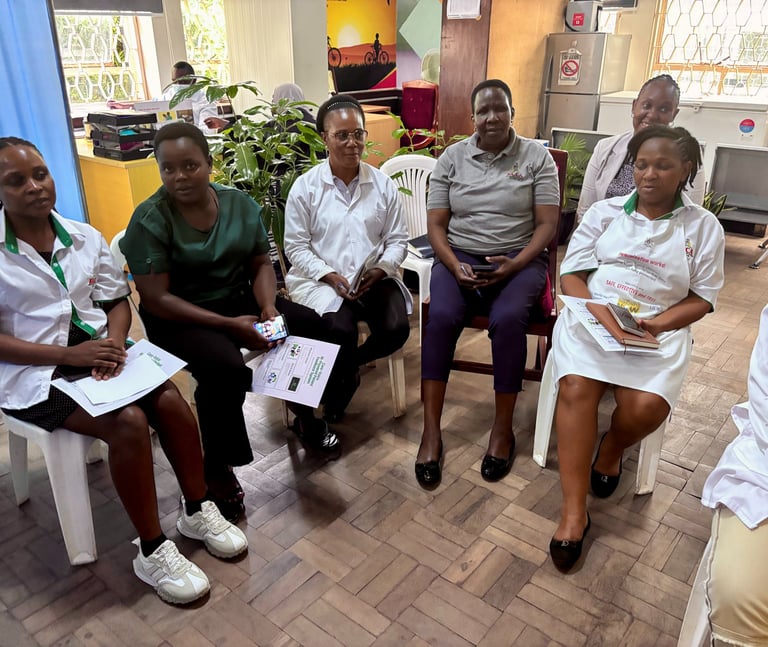
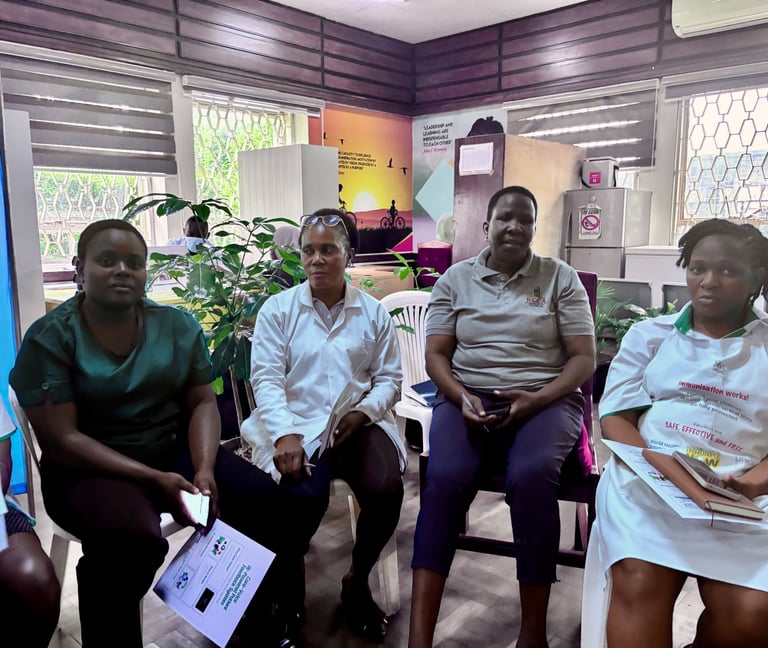
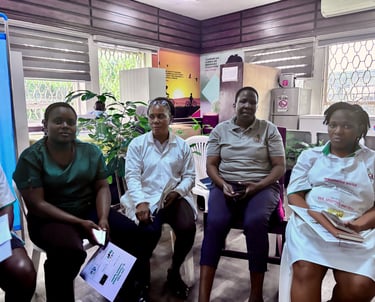
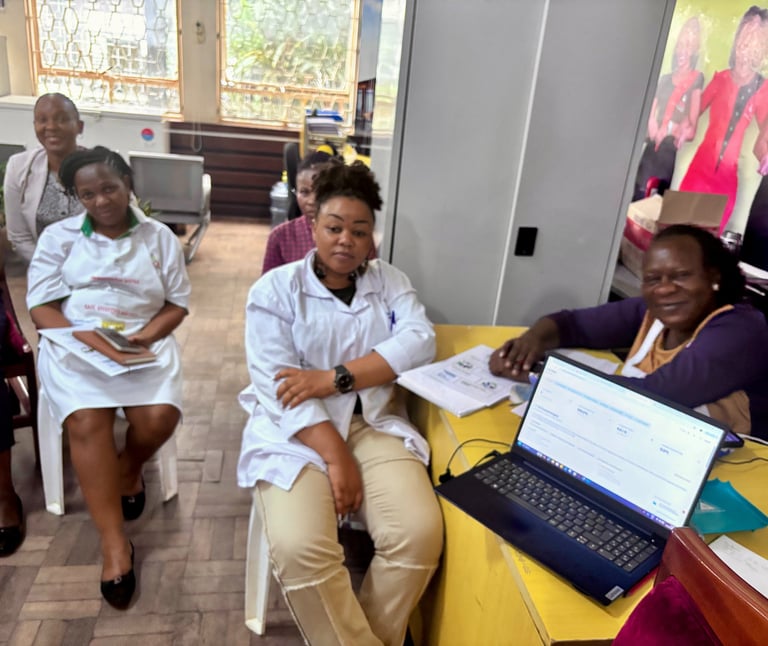
In April 2026, a significant milestone was achieved in the journey toward patient-centered healthcare in Uganda. Q-Stats Health Consulting, in partnership with the Directorate of Public Health at Kampala Capital City Authority (KCCA), successfully concluded a pilot of Care Voice across eight KCCA health facilities, coordinated through City Clinic.
The pilot was designed to assess the functionality, usability, and acceptability of Care Voice among patients, healthcare workers, and clinic administrators. Beyond testing a digital platform, the initiative sought to answer an important question: Can healthcare facilities collect and use patient feedback more effectively to improve quality of care?
The answer was a resounding yes.
For years, many healthcare facilities have relied on paper-based feedback systems that are difficult to analyze, costly to maintain, and vulnerable to human error and bias. Others have adopted QR-code-based approaches that often struggle with low response rates because patients are reluctant or unable to scan them. These limitations have left many institutions without timely, actionable insights into patient experiences.
Care Voice offers a practical alternative. Through its automated, multi-channel engagement model, the platform reaches patients through familiar and convenient communication channels, enabling them to share honest feedback at a time and place that suits them. The result is richer, more authentic patient experience data that healthcare teams can immediately use to inform quality improvement efforts.
Throughout the pilot, patients demonstrated strong engagement with the platform, while clinical and administrative teams appreciated its ease of use and real-time reporting capabilities. As a mobile-first solution, Care Voice allows healthcare leaders to monitor patient experience trends, identify emerging concerns, and make evidence-based decisions from anywhere.
Most importantly, the pilot provided proof of concept that Care Voice is not merely a digital tool; it is a scalable solution for strengthening patient-centered care. By transforming feedback into actionable intelligence, the platform empowers health facilities to continuously listen, learn, and improve.
The successful collaboration between Q-Stats Health Consulting and KCCA demonstrates the power of public-private innovation in addressing real-world health system challenges. As healthcare systems increasingly embrace digital transformation, Care Voice stands ready to support facilities in building a culture where every patient voice contributes to better care.
The future of quality improvement is not just collecting feedback; it is using it. Care Voice is helping make that future a reality.
Here's more!
From Complex Spreadsheets to Smart Dashboards: Delivering the Digital Health M&E Accelerator Training
12/12/2025
In today’s world, digital transformation is not a distant goal—it is a reality we must embrace. For frontline teams running public health projects, digital literacy is no longer a “nice-to-have” skill; it is an indispensable capability that enables them to cope with the evolving demands of digital data management, activity tracking, and real-time reporting.
Recognizing this need, Qstats Health Consulting, in partnership with Action 4 Health Uganda, designed and delivered the Digital Health M&E Acceleration Training. This program focused on equipping frontline Monitoring & Evaluation (M&E) teams with the knowledge and confidence to use less complex yet modern digital tools like Airtable, Looker Studio and Canva—tools that make managing projects more seamless, collaborative, and impactful.
Facilitators from Qstats had the privilege of guiding participants through practical modules on survey design, database management, dashboards, and reporting. What stood out most was the energy and inspiration of the women in the POWER Project, working in health and entrepreneurship spaces who joined the training. Their commitment to learning and adapting digital tools reflects the resilience and innovation driving community health forward.
This training marked the beginning of an interesting journey: moving from scattered spreadsheets to smart dashboards, from manual reporting to real-time insights, and from digital hesitation to digital confidence.
At Qstats, we believe that empowering frontline teams with digital literacy is the key to sustainable health impact. Together with partners like Action 4 Health, we are committed to scaling this training and ensuring that digital transformation in public health is both inclusive and practical.








Here's more!
Harnessing AI for Patient Voices: Reflections from the AI in Health Africa Conference 2025
12/11/2025
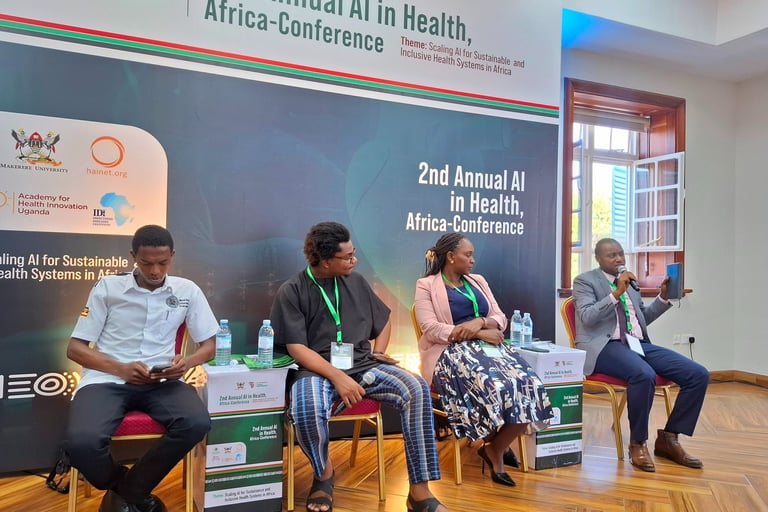
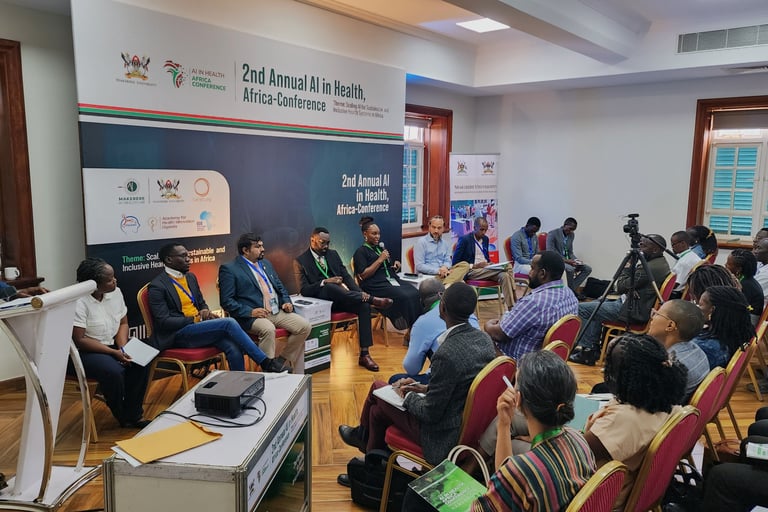
Last week, Irene Jean Kagogwe had the privilege of presenting at the AI in Health Africa Conference at Makerere University, hosted by the Makerere AI Health Lab and the Infectious Diseases Institute. The event was headlined by Hon. Dr. Monica Musenero, Uganda’s Minister for Science, Technology and Innovation, and brought together innovators, researchers, and policymakers to explore how artificial intelligence can transform healthcare across Africa.
As the founder of Qstats Health Consulting, she introduced our latest innovation: CareVoice, an AI-driven patient-feedback management system designed to support hospitals in real-time decision making. CareVoice uses artificial intelligence to derive feedback summaries from patient experiences, enabling hospital administrators to respond swiftly and effectively. The goal is simple yet powerful—improving patient experience and care by ensuring that every voice is heard and acted upon.
The audience found CareVoice to be an intriguing innovation, particularly because it bridges the gap between patient feedback and administrative action. In a region where healthcare systems are often stretched, tools like CareVoice can empower hospitals to be more responsive, empathetic, and data-driven.
Beyond showcasing technology, she also emphasized the ethical use of AI in public health research. Her message was clear: AI should be acknowledged transparently in research processes, and it must be treated as a tool for production—not an end in itself. This distinction is critical to maintaining trust, integrity, and accountability in how we deploy AI for public good.
The conversations at the conference reaffirmed our belief that Africa is ready to lead in responsible AI innovation. By combining cutting-edge technology with ethical frameworks, we can create solutions that not only advance healthcare but also uphold the values of inclusivity, transparency, and human dignity.
As Qstats Health Consulting continues to scale CareVoice, our commitment remains steadfast: to build digital health solutions that are trustworthy, inclusive, and impactful for public health organizations across East Africa.